
How to Search Philadelphia County Court Records
Philadelphia County court records do not live in one all-purpose county database. Civil records from the Court of Common Pleas Civil Trial Division start with Philadelphia Civil Docket Access. Criminal Common Pleas records, Philadelphia Municipal Court records, appellate matters, and many public docket sheets are searched through Pennsylvania UJS Case Search. Traffic fines and some Traffic Division citation payments now route through PAePay. Marriage and probate records use the Register of Wills channels.
The most common mistake is searching the wrong court first. Philadelphia Municipal Court processes every criminal arrest, holds misdemeanor trials, and conducts felony preliminary hearings. Felonies then move to the Court of Common Pleas. A single incident may have an MC docket and a CP docket, so the cross-court docket number on UJS docket sheets can be the link between the two records.
The First Judicial District homepage is the official court entry point for Philadelphia County court services, forms, calendars, language access, ADA information, opinions, local rules, and case-search links.
The official First Judicial District homepage is shown below as the county-level court starting point.
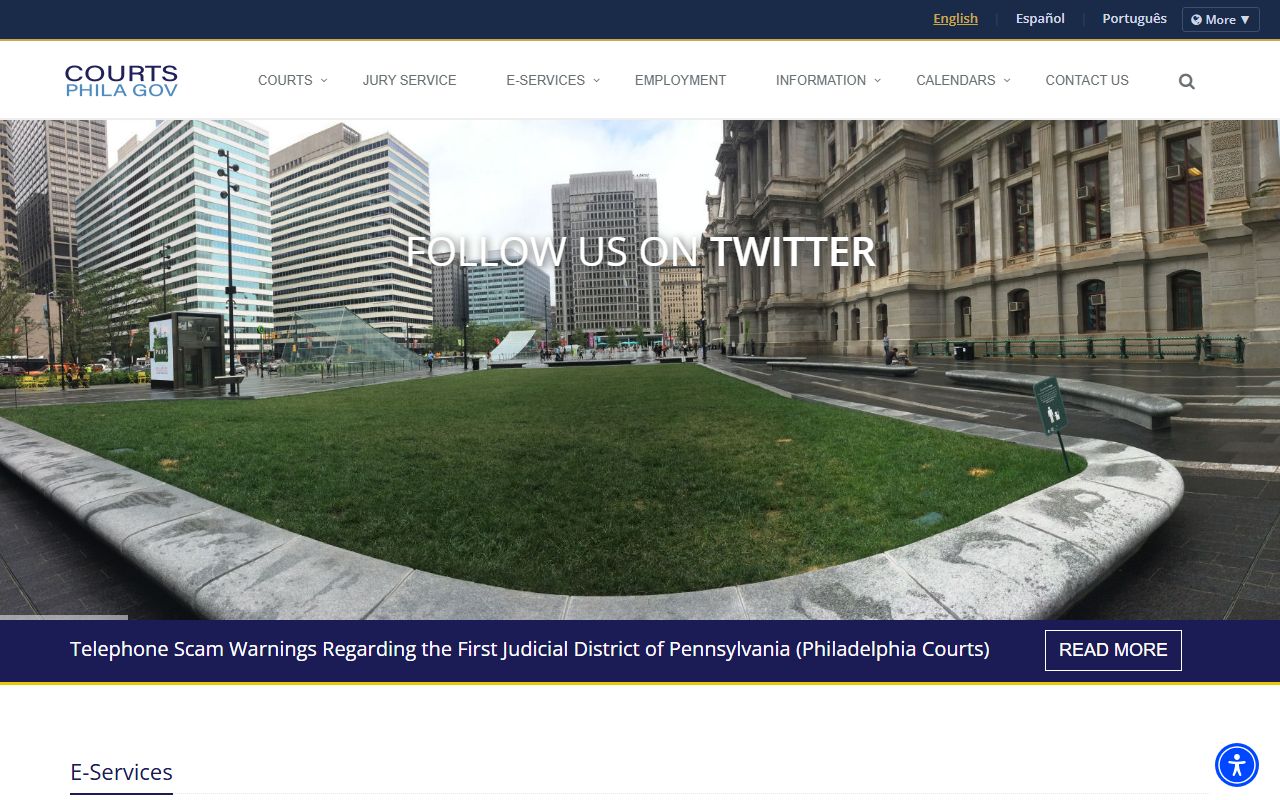
Use it as the broad door into Philadelphia County court offices, then move to the record-specific portal that matches the case type.
- Identify the record type first: civil, criminal, traffic, marriage, probate, warrant-related, or jail custody.
- Use Philadelphia Civil Docket Access for Common Pleas civil case searches by person, company, judgment, Case ID, or court listing.
- Use UJS Case Search for public criminal, Municipal Court, Common Pleas, appellate, and related docket sheets.
- For traffic payments, search PAePay by citation number or person and select Philadelphia Traffic Division when needed.
- For certified copies, exemplifications, sealed files, older files, or record copies not online, contact the office that keeps the record.
Philadelphia County Court Search Fields
Philadelphia Civil Docket Access is strongest for civil cases because it was built for the First Judicial District Civil Trial Division. It supports person and company searches, judgment searches, known Case ID docket reports, and court listings. The portal also links returned listings to docket access and document purchase options when documents are available.
The statewide UJS portal is broader. It covers public docket sheets for criminal Common Pleas, Philadelphia Municipal Court, appellate matters, and magisterial district categories. UJS is not a Pennsylvania State Police criminal-history background check. It is a court docket search, so the record may show public case events without serving as a certified criminal history.
| Portal | Useful fields | Best use |
|---|---|---|
| Philadelphia Civil Person/Company Search | Last name or company, first name, middle name, filing-date range, phonetic checkbox | Find civil cases when the Case ID is not known. |
| Philadelphia Civil Judgment Search | Last name or company, first name, judgment-date range, phonetic checkbox | Look for civil judgments against a person or business. |
| Philadelphia Civil Docket Report | Case ID | Pull a known civil docket report directly. |
| UJS Case Search | Docket number, participant name, organization, OTN, complaint number, police incident number, filed-date range, court type, county | Search criminal, Municipal Court, Common Pleas, appellate, and related public docket sheets. |
The UJS court case information page describes statewide public docket access and paper-record options for covered court categories.
The Pennsylvania court case information page is one of the main public explanations for searchable UJS case categories.
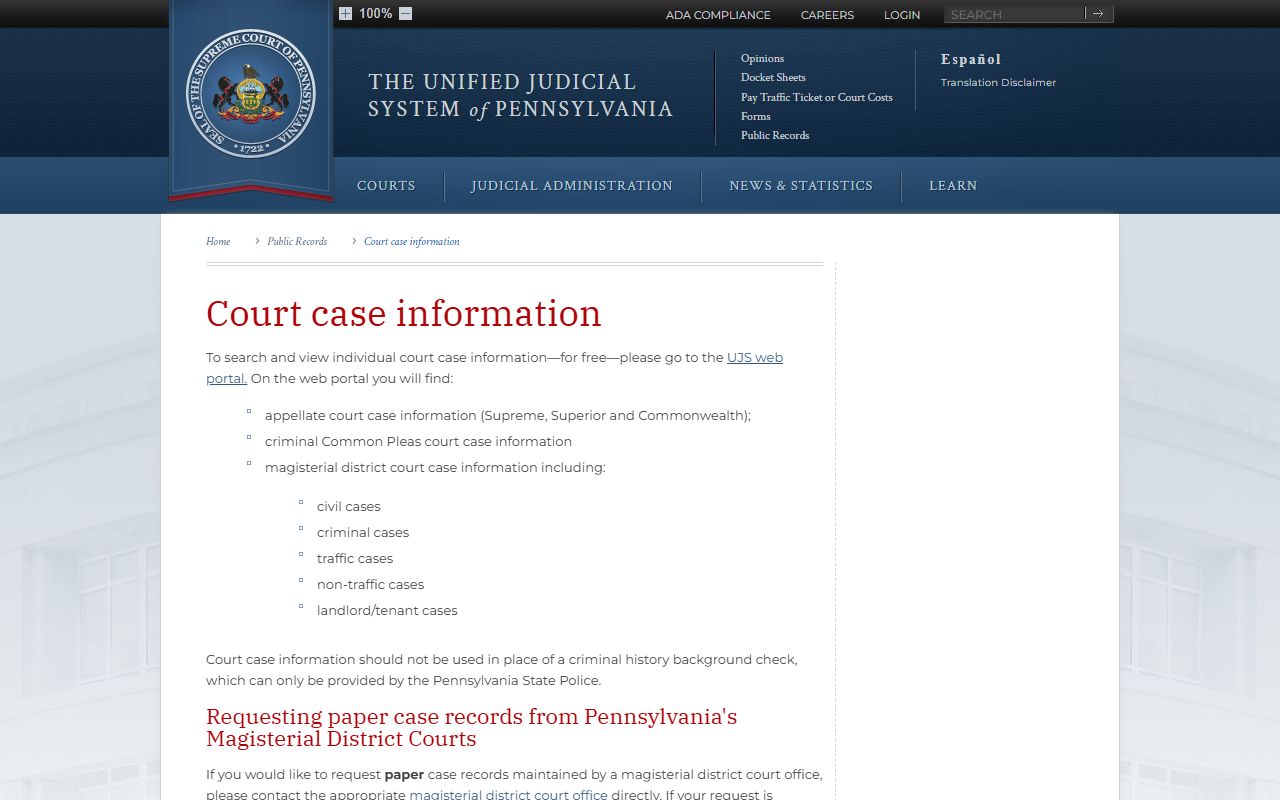
That statewide source matters in Philadelphia because public criminal and Municipal Court docket sheets are not searched in the same local civil portal used for Common Pleas civil cases.
Philadelphia County Court System
Philadelphia County is the First Judicial District of Pennsylvania. Its local court system is unusual because it is made up of two courts: the Philadelphia Court of Common Pleas and the Philadelphia Municipal Court. The Court of Common Pleas is the general jurisdiction trial court for major civil, criminal, family, and Orphans' Court matters. Municipal Court handles local lower-court functions, including criminal arrest processing, misdemeanor trials, preliminary felony hearings, landlord-tenant matters, small civil cases, code enforcement, and moving-violation traffic cases.
Appeals from Philadelphia trial courts generally go to the Superior Court of Pennsylvania for most criminal and civil matters, to the Commonwealth Court for government-related categories, and then to the Supreme Court of Pennsylvania when review is available or accepted.
Common criminal case flow: arrest and Municipal Court processing › preliminary hearing or misdemeanor trial › Common Pleas felony adjudication when held for court › plea, trial, disposition, sentence, and appeal when applicable.
| Court or office | Location | Records and jurisdiction |
|---|---|---|
| Court of Common Pleas - Civil Trial Division | Philadelphia City Hall | Civil cases, judgments, civil docket reports, civil filings, and related copies. |
| Court of Common Pleas - Criminal Trial Division | Justice Juanita Kidd Stout Center for Criminal Justice | Felony trial records, CP criminal dockets, pleas, verdicts, sentencing, and appeals. |
| Court of Common Pleas - Family Division | Family Court Building | Divorce, custody, support, dependency, juvenile, and family matters, with access limits for some records. |
| Orphans' Court Division | Philadelphia City Hall | Estates, wills, guardianships, trusts, and Orphans' Court dockets through the Register of Wills. |
| Philadelphia Municipal Court | City Hall and related facilities | Criminal arrest processing, misdemeanors, preliminary felony hearings, landlord-tenant, small civil, and code matters. |
| Municipal Court Traffic Division | 800 Spring Garden Street | Moving violation citations and hearing records, not parking or camera tickets. |
Philadelphia County Courthouses
Philadelphia court records are tied to several Center City and city court buildings. City Hall is the civil, probate, marriage, and administrative records hub. Criminal trial work is centered at the Justice Juanita Kidd Stout Center for Criminal Justice. Family matters use the Family Court Building. Moving traffic citations are handled through the Municipal Court Traffic Division at Spring Garden Street.
Philadelphia City Hall
1400 John F. Kennedy Boulevard
Philadelphia, PA 19107
Civil OJR: 215-686-6652
Justice Juanita Kidd Stout Center
1301 Filbert Street
Philadelphia, PA 19107
Prisoner Security: 215-683-7900
Family Court Building
1501 Arch Street
Philadelphia, PA 19102
Domestic Operations: 215-686-3526
Municipal Court Traffic Division
800 Spring Garden Street
Philadelphia, PA 19130
Traffic case counter
Types of Philadelphia County Court Records
Philadelphia County court records include civil, criminal, family, probate, traffic, warrant-related, and custody-related material. Each type has its own keeper. Civil complaints, motions, orders, judgments, and civil docket reports are Common Pleas Civil Trial Division records. Criminal records may start in Municipal Court and move to Common Pleas. Divorce records are Family Division and Office of Judicial Records records, while marriage licenses and probate files are Register of Wills records.
Traffic records require another distinction. Moving violations are Municipal Court Traffic Division cases. Parking, red-light camera, and speed-camera tickets are handled by the Philadelphia Parking Authority, not the Traffic Division.
- Civil records: complaints, petitions, motions, orders, judgments, civil docket reports, and available purchased documents.
- Criminal records: MC and CP dockets, charges, OTN data, bail, hearing events, pleas, verdicts, sentences, probation, and appeals.
- Family and divorce records: divorce filings, support, custody, dependency, juvenile, and adoption-related matters, some with restricted access.
- Probate and Orphans' Court records: wills, estates, letters, inventories, guardianships, trusts, and Orphans' Court dockets.
- Traffic court records: moving violation citations, pleas, hearings, dispositions, fines, costs, and payment status.
What Philadelphia County Court Records Show
A Philadelphia County court record is usually a docket-centered file. It shows the case number, the court, the parties, major filings, hearing events, orders, and current status. Criminal records add charge rows, statute sections, grading, complaint numbers, OTN fields, bail information when public, pleas, dispositions, and sentences. Civil records add complaint type, judgment data, filings, orders, and document purchase links when the civil system makes them available.
| Field | What it shows |
|---|---|
| Docket or Case ID | The CP, MC, MJ, appellate, citation, or civil Case ID assigned by the court system. |
| Cross-court docket number | A key Philadelphia criminal field that can connect Municipal Court and Common Pleas records for one incident. |
| Parties | Plaintiff, defendant, Commonwealth, petitioner, respondent, decedent, or applicant names depending on record type. |
| Charges or causes | Criminal statute and grade, civil complaint type, probate petition type, or traffic citation information. |
| Docket entries | Filings, motions, orders, hearings, continuances, judgments, sentences, warrants, notices, appeals, and payment events. |
| Status or disposition | Open, closed, dismissed, judgment entered, held for court, guilty, not guilty, withdrawn, nolle prossed, sentenced, or appealed. |
Philadelphia County Court Access Rules
Public access to Philadelphia County court records is shaped by Pennsylvania court policy, state law, and record-specific rules. The Pennsylvania Right-to-Know Law is important for general state and local agency records, but court case records are governed heavily by the judiciary's case-record policies. That is why public court dockets, confidential filing rules, and redaction requirements may differ from ordinary city records requests.
The Pennsylvania public records policies page collects the court policies, data policy materials, forms, FAQs, and access-limit charts used by the Unified Judicial System.
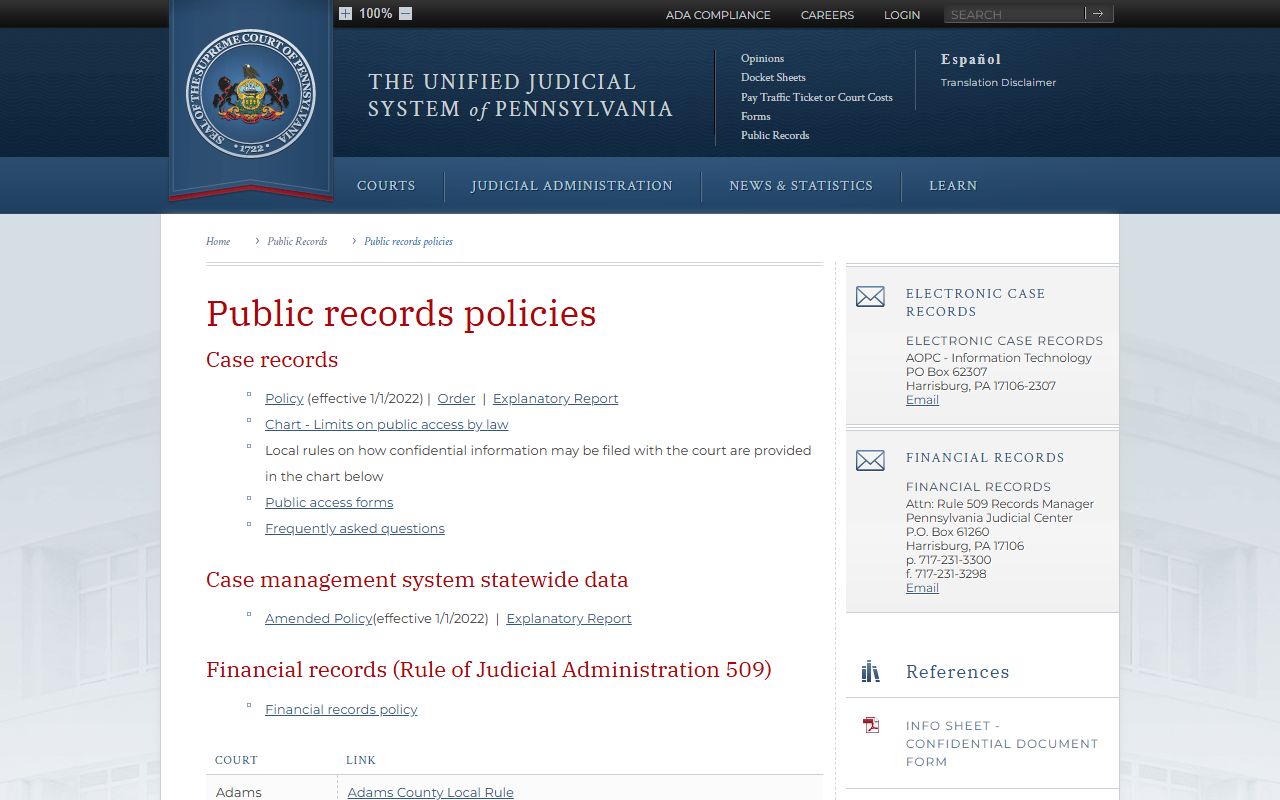
Those court policies explain why a public docket can be available online while some documents, identifiers, or case categories remain restricted.
Key public access sources:
Pennsylvania Right-to-Know Law covers many Commonwealth and local agency records, but court case records also follow judicial policies.
Case Records Public Access Policy defines case records, public access, and confidential information categories for Pennsylvania courts.
18 Pa.C.S. Section 9121 governs criminal history dissemination and helps explain why a docket sheet is not a background check.
18 Pa.C.S. Section 9122 is the main Pennsylvania expungement statute for eligible criminal history records.
The full Pennsylvania Right-to-Know Law text is also an official source for non-court agency-record procedures.
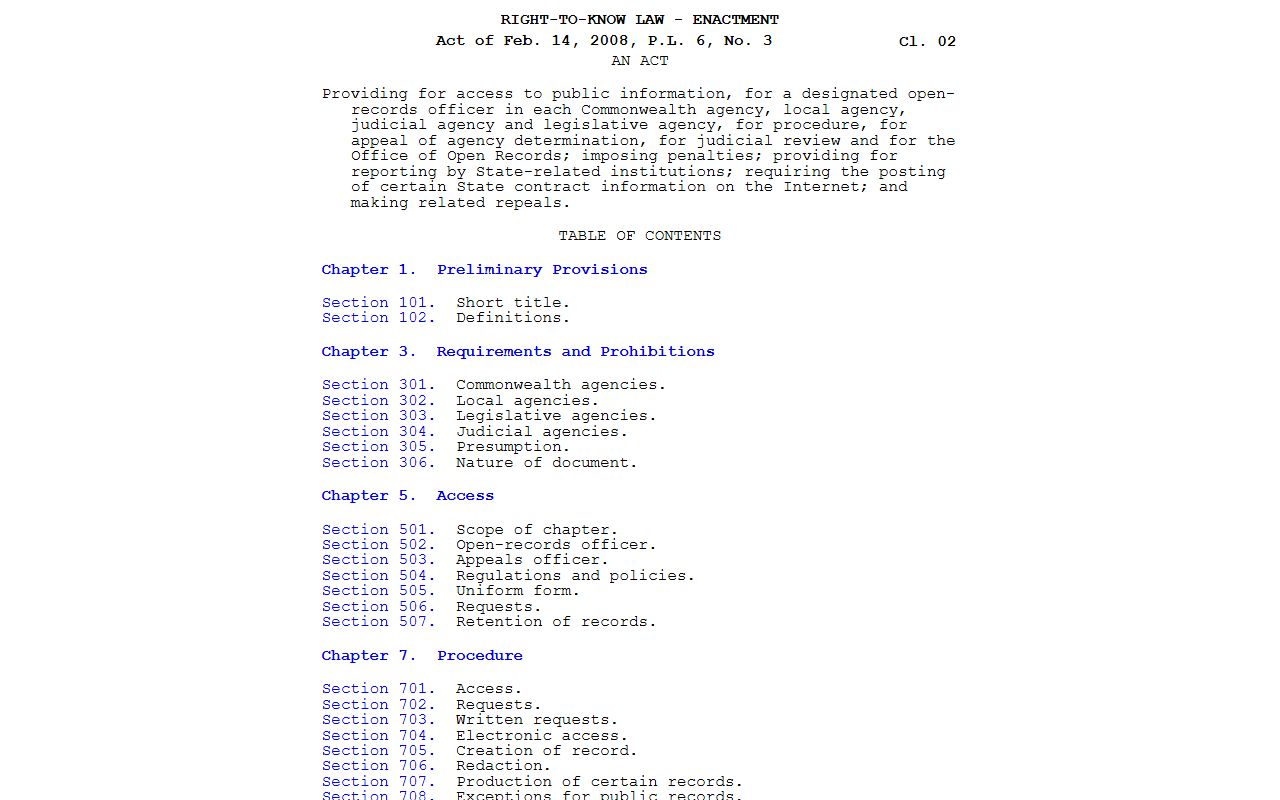
Use it for city or agency records context, but use court policy and the originating court office for case-file access questions.
Restricted Philadelphia County Court Records
Not every Philadelphia County court record is public. Juvenile, dependency, adoption, mental health, abuse-victim, sealed, and expunged records are restricted by policy, statute, court order, or filing rules. Public systems also redact Social Security numbers, financial account numbers, minors' names, and other protected identifiers.
Sealing limits public access without always destroying the record. Expungement removes, destroys, or segregates eligible criminal history record information after a court order and agency processing. For Philadelphia criminal matters, the search usually starts by identifying every relevant MC and CP docket number before eligibility under Pennsylvania law can be assessed.
Note: A private background-check result is not the right proof that a sealed or expunged Philadelphia record has been updated.
Philadelphia County Criminal Court Records
Philadelphia criminal court records often have two layers. Municipal Court handles the first stage because every criminal arrest is processed there. Felony cases may later move to the Court of Common Pleas after preliminary proceedings, while misdemeanor trials may remain in Municipal Court. The docket may show charges, complaint numbers, OTN data, bail, hearings, dispositions, warrants, pleas, sentences, probation, and appeal activity.
Charge research is not the same as reading the full criminal case file. The charge record shows the accusation, statute, grade, count, offense date, and charging status. The full case record adds what happened later, such as plea, trial, disposition, sentence, and post-sentence motions. For a deeper split between arrest data and filed charges, use the Philadelphia County arrest records and court charges page.
- OTN
- Offense tracking number used in Pennsylvania criminal records.
- Held for court
- A charge or case has moved from the lower court stage to Common Pleas.
- Nolle prosequi
- A prosecutor decision not to pursue a charge.
- Disposition
- The current or final result of a case or charge.
Philadelphia County Sheriff and Jail
Philadelphia jail custody is handled by the Philadelphia Department of Prisons, not by a sheriff-run county jail roster. The Philadelphia incarcerated-person locator covers PDP facilities only and requires either a PID or a full name with date of birth. The city also lists 24-hour locator help lines at 215-685-8394, 215-685-8395, and 215-685-8396, with Spanish service at 215-685-8692.
The Philadelphia Sheriff's Office is separate. It lists its main office at 100 South Broad Street, 5th Floor, Philadelphia, PA 19110, main phone 215-686-3560, and weekday walk-in hours. The sheriff handles warrant and court-order functions, prisoner security, family court domestic operations, and real estate services. For custody details, start with PDP. For public warrant priority lists and warrant-unit contacts, start with the sheriff and UJS dockets.
Philadelphia County Warrant Records
Philadelphia does not appear to publish a complete public active warrant search for every warrant type. The Sheriff's Top Priority List and related Fugitive Warrant Unit material are public safety and tip tools, not a complete clearance database. UJS public docket sheets may show bench warrant or warrant-related entries when they are part of a public case record, especially for failure to appear or court-order enforcement.
The sheriff's research lists a Warrant Unit phone of 215-683-3726 from the Top Priority List context and a Warrant Unit/PFAs phone of 215-686-3574 from the departments page. People who believe a warrant exists should contact counsel, the court, or the appropriate warrant unit rather than relying only on public lists.
Marriage, Divorce, and Orphans' Court
Marriage licenses and marriage records are handled by the Philadelphia Register of Wills, not by the Office of Judicial Records. Marriage license applicants use City Hall Room 413, and marriage record services use Room 413/415. The Register of Wills also serves as Clerk of the Orphans' Court and keeps probate records through City Hall Room 180.
Divorce records are different. Divorce filings and certified decrees are Common Pleas Family Court and Office of Judicial Records records. The Office of Judicial Records fee schedule lists divorce commencement and defendant first-filing fees, while the Register of Wills handles marriage licenses, marriage copies, probate, wills, estates, and Orphans' Court dockets.
For record-specific steps, use Philadelphia County marriage and divorce records or the Philadelphia County Orphans' Court page.
Philadelphia County Court Records Fees
Fees depend on the office and the record. Philadelphia Civil Docket Access is free to search, but the civil docket page warns that a $5 convenience fee is added at checkout when a transaction is made. Certified and exemplified copies, name searches, docket reports, record copies, marriage licenses, marriage copies, and probate mail research all have separate fee lines.
| Item | Office | Amount |
|---|---|---|
| Certification or certificate | Office of Judicial Records | $41.58 |
| Exemplification | Office of Judicial Records | $83.16 |
| Name search | Office of Judicial Records | $58.52 |
| Non-party docket report | Office of Judicial Records | $5.50 |
| Photocopy or electronic record | Office of Judicial Records | $0.25 per page |
| Regular marriage license | Register of Wills | $90 |
| Certified marriage copy | Register of Wills | $25 |
| Mail probate record research | Register of Wills | $20 |
Philadelphia County Record Limits
Online court records can lag behind courtroom events, clerk entries, payment posting, agency updates, and order distribution. UJS public docket sheets are helpful for public case events, but they are not official criminal history reports. Philadelphia civil docket data is useful for public civil case research, but official copies and authentication still come through the Office of Judicial Records.
The UJS help page describes public web docket sheets, secure docket sheets, calendars, PA eDocket, and related public access tools.
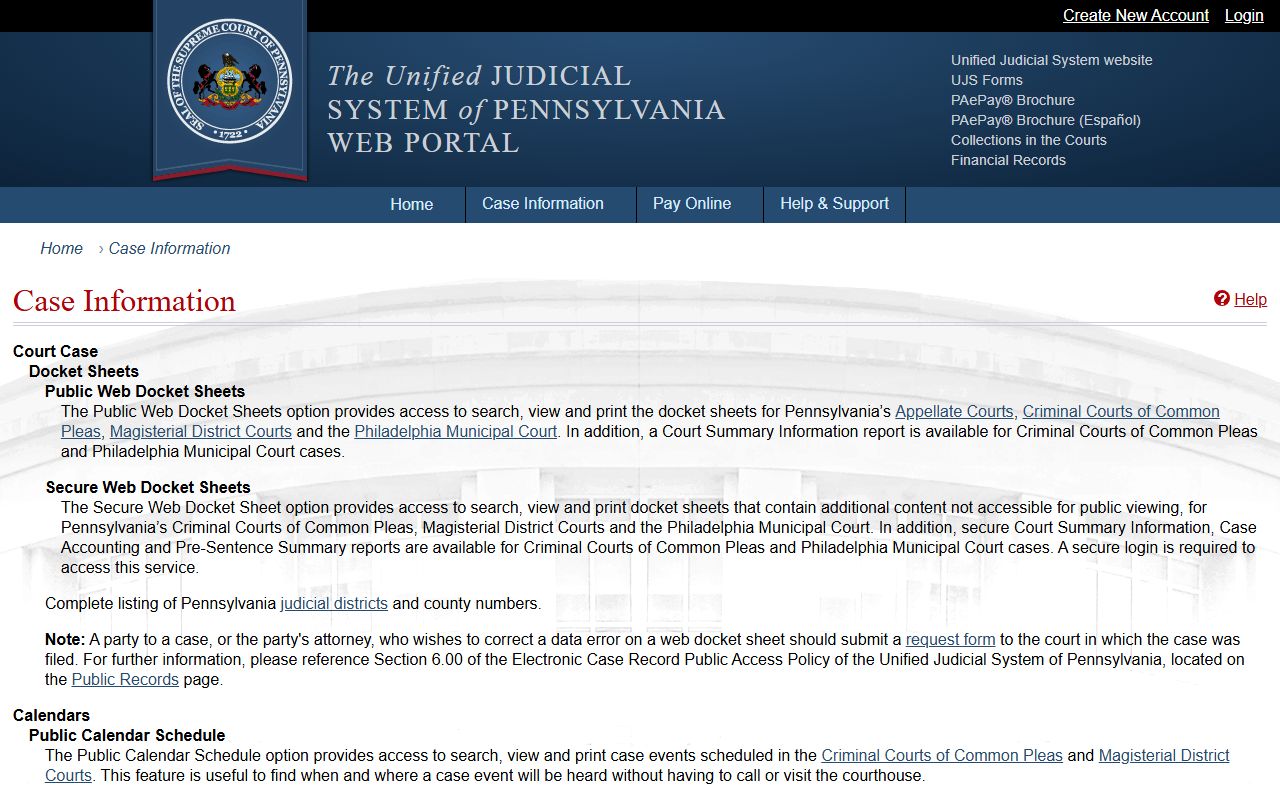
That distinction matters when a person needs proof for court, licensing, employment, immigration, or another formal use: confirm with the issuing office before relying on a screen result.
Note: Certified court documents must come from the official record office, not from a public docket screenshot.
Philadelphia County Court History
Philadelphia has a central place in Pennsylvania legal history because it was the colonial and early national capital and remains the state's largest city. The modern First Judicial District reflects that size. Unlike most Pennsylvania counties that rely on magisterial district judges for local lower-court functions, Philadelphia uses Municipal Court for much of that work.
City Hall remains both a civic landmark and a working record center. Room numbers matter in a practical way: probate is Room 180, civil Office of Judicial Records contact is Room 284, marriage licensing is Room 413, and marriage records use Room 413/415. Modern records access also keeps changing. The former Traffic Division payment page points users to UJS starting January 23, 2025, and PDP personal mail changed to scanned tablet delivery beginning April 6, 2026.
Philadelphia County Court Records FAQ
Where do civil court records start?
Common Pleas civil cases start with Philadelphia Civil Docket Access. Search by person, company, judgment, Case ID, or court listing. For certified copies, name searches, and exemplifications, contact the Office of Judicial Records civil office.
Where are criminal court records searched?
Public Philadelphia criminal docket sheets are searched through UJS Case Search. Check both Municipal Court and Common Pleas when a felony arrest may have moved from preliminary proceedings to trial-level adjudication.
Are Philadelphia traffic tickets court records?
Moving violations are handled by the Philadelphia Municipal Court Traffic Division and can involve PAePay or hearing-list tools. Parking, red-light camera, and speed-camera tickets are separate Parking Authority matters.
Who keeps probate records?
The Register of Wills serves as Clerk of the Orphans' Court and keeps wills, estate files, letters, inventories, and Orphans' Court dockets. Public probate copy requests can be made by mail or in person.
Is a UJS docket a background check?
No. A public docket sheet shows court case events. Pennsylvania criminal history dissemination follows separate law, and formal background checks use different official channels.