
Philadelphia County Criminal Court Records
A Philadelphia County criminal court record is the case-level file kept by the court once a criminal matter is opened. It is not just a list of arrest facts. The record may show the complaint, OTN, docket number, charges, bail, preliminary arraignment, preliminary hearing, formal arraignment, motions, pleas, trial events, dispositions, sentence, probation, appeals, and warrant entries. Charge details are part of the case file, but the full criminal record also shows what happened after charges were filed.
The First Judicial District structure is important. Philadelphia Municipal Court has initial jurisdiction in processing every criminal arrest. It also conducts misdemeanor trials and preliminary hearings for felony cases. Felony cases that move forward are later adjudicated in the Court of Common Pleas. That means one criminal incident may have an MC docket number and a CP docket number. The Philadelphia County arrest records and court charges page focuses on the arrest-to-charge path, while this page stays on the full court case record.
Search Philadelphia County Criminal Records
The primary public online path is Pennsylvania UJS Case Search. It covers public docket sheets for Common Pleas criminal cases, Philadelphia Municipal Court matters, appellate cases, and other Pennsylvania case categories. Search fields include docket number, participant name, organization, OTN, complaint number, police incident number, date filed, county, and court type. For Philadelphia criminal cases, select the relevant Philadelphia court and compare related MC and CP dockets when both appear.
- Open UJS Case Search and choose a search method such as participant name, docket number, OTN, complaint number, or police incident number.
- Select Philadelphia and the correct court type when the portal requires a court or county filter.
- Open each likely result and review the caption, defendant name, filing date, court, complaint number, and OTN.
- For felony matters, compare the cross-court docket number so the Municipal Court docket and Common Pleas docket are not read as separate incidents.
- For official or certified criminal records, use the Clerk of Courts function of the Office of Judicial Records rather than a public web printout.
The public criminal history dissemination statute source capture is included below because it frames why docket sheets are not the same as background checks.
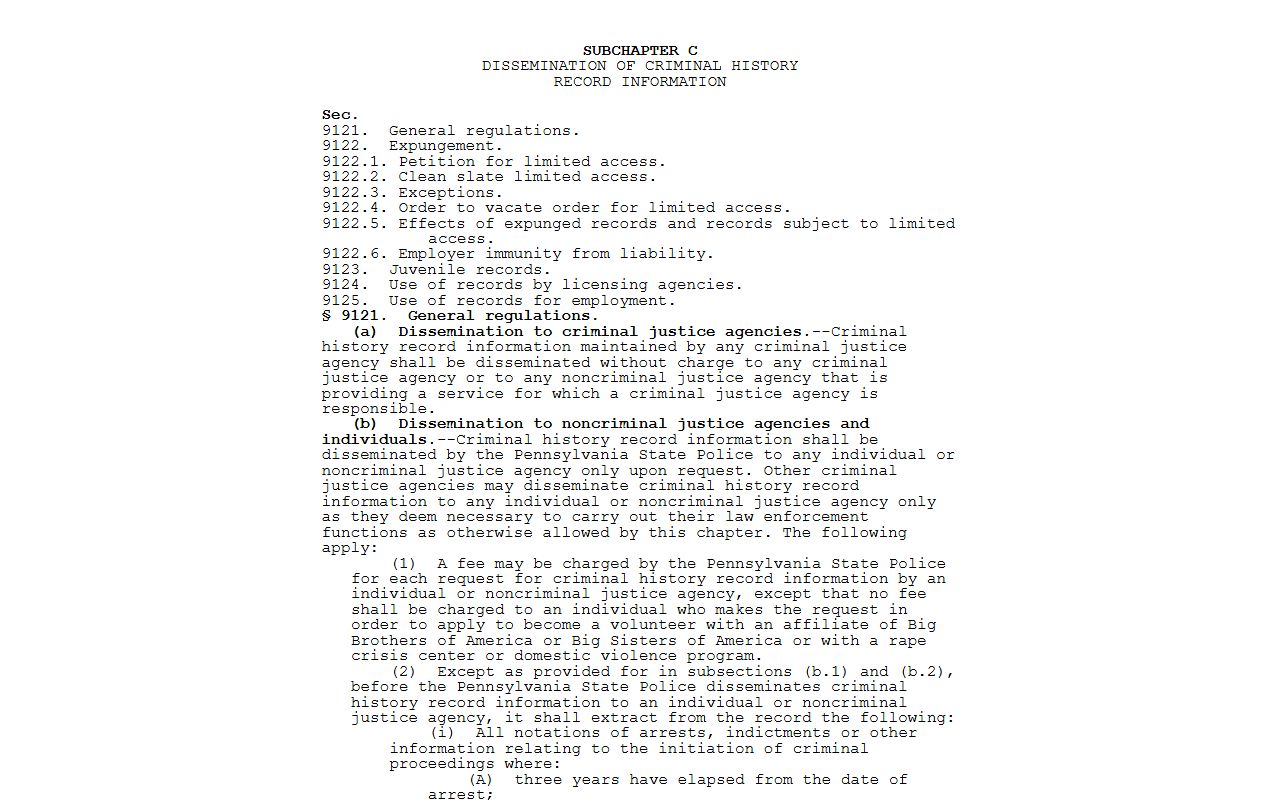
The distinction matters when a user needs a court case record rather than a Pennsylvania State Police criminal-history report.
Philadelphia County Criminal Case Flow
Philadelphia criminal court records follow the path created by the court structure. Police and charging facts begin the matter, Municipal Court processes the initial arrest and early proceedings, and eligible felony cases move to Common Pleas after preliminary proceedings. Docket entries should be read in that order. A case that looks incomplete in one court may continue in the linked court number.
Case flow: Charges Filed › Preliminary Arraignment › Preliminary Hearing › Formal Arraignment › Pretrial and Motions › Plea or Trial › Disposition › Sentencing
| Stage | What Happens | Where It May Appear |
|---|---|---|
| Charges Filed | A complaint, OTN, statute, grade, and charge count enter the record. | Municipal Court docket and later CP docket if held for court. |
| Preliminary Arraignment | Early appearance after arrest, often with bail or release conditions. | Municipal Court criminal docket. |
| Preliminary Hearing | Felony charges are tested for whether they should move forward. | Municipal Court, with held-for-court results tied to Common Pleas. |
| Pretrial and Motions | Parties file requests, seek rulings, and prepare for plea or trial. | Common Pleas criminal docket for felony cases. |
| Plea or Trial | The case resolves by plea, bench trial, jury trial, or dismissal. | Municipal Court or Common Pleas depending on case type. |
| Sentencing | The court imposes jail, prison, probation, costs, restitution, or other terms after conviction. | Disposition and sentence fields on the docket sheet. |
The Philadelphia District Attorney homepage capture is included because the prosecutor's office is central to the filing and management of criminal cases.

The District Attorney role helps explain why charges may be amended, withdrawn, reduced, or resolved differently from the first complaint.
What Philadelphia County Criminal Records Show
Philadelphia County criminal court records should be read field by field. The docket number tells the court and case track. The OTN and complaint number can connect the record to the original criminal complaint. The court and division show whether the case is in Municipal Court or Common Pleas. The charge rows show each count separately, so one arrest can produce several charges with different grades, statuses, pleas, and dispositions.
| Field | What It Shows |
|---|---|
| MC or CP Docket Number | The Municipal Court or Common Pleas case number used to track the criminal court record. |
| Cross-Court Docket Number | The link between Municipal Court and Common Pleas records for the same Philadelphia criminal incident. |
| OTN and Complaint Number | Offense tracking and complaint identifiers tied to the criminal initiation. |
| Charges | Statute section, offense description, grade, count number, offense date, and charge status. |
| Bail | Bail type, amount, release status, or related conditions when public. |
| Plea and Disposition | Guilty, not guilty, dismissed, withdrawn, nolle prossed, held for court, sentenced, or appealed results. |
| Sentence or Order | Custody, probation, fines, costs, restitution, or other court-ordered terms after conviction. |
| Warrant Entries | Bench warrant, capias, or other public warrant-related docket entries when the court displays them. |
Charges vs Convictions
A charge is an accusation filed in court. A conviction is a result after a guilty plea, verdict, or other qualifying adjudication. Philadelphia County criminal court records can show charges that were dismissed, withdrawn, reduced, amended, nolle prossed, or resolved with no conviction. Read each count separately because the result for one charge may differ from the result for another charge in the same case.
| Point | Charge | Conviction |
|---|---|---|
| Meaning | Formal accusation filed in court | Case or count resolved as guilt by plea or verdict |
| Record Location | Charge rows, complaint number, OTN, and docket entries | Disposition, plea, verdict, and sentencing entries |
| Can Change | May be amended, reduced, dismissed, or nolle prossed | May be appealed, vacated, expunged, or subject to other court relief |
| Background Check Risk | May appear in court dockets but is not proof of guilt | May affect criminal-history reporting, subject to law and record limits |
The District Attorney leadership source capture is included because charging policy and prosecutorial decisions affect what the docket shows.

Leadership and office structure do not decide a case alone, but they identify the agency responsible for prosecution in Philadelphia County criminal court records.
Philadelphia County Criminal Dispositions
Disposition terms mark the current or final result. Guilty and not guilty are direct outcomes. Dismissed can mean the court did not allow a charge or case to proceed. Nolle prosequi means the prosecutor chose not to pursue a charge. Held for court means a felony matter moved from Municipal Court to Common Pleas. Withdrawn means a charge or filing was pulled back. Sentenced means the court imposed punishment or conditions after conviction.
Sentencing entries may list incarceration, probation, fines, costs, restitution, credit for time served, or other conditions. Public docket sheets may not display every paper order or confidential detail. If the exact wording of a sentence is needed for legal use, request an official copy from the criminal clerk channel. If the issue is current custody, use the Philadelphia Department of Prisons locator rather than assuming the court docket gives a live jail location.
The District Attorney divisions and units source capture identifies the Charging Unit and Conviction Integrity Unit.
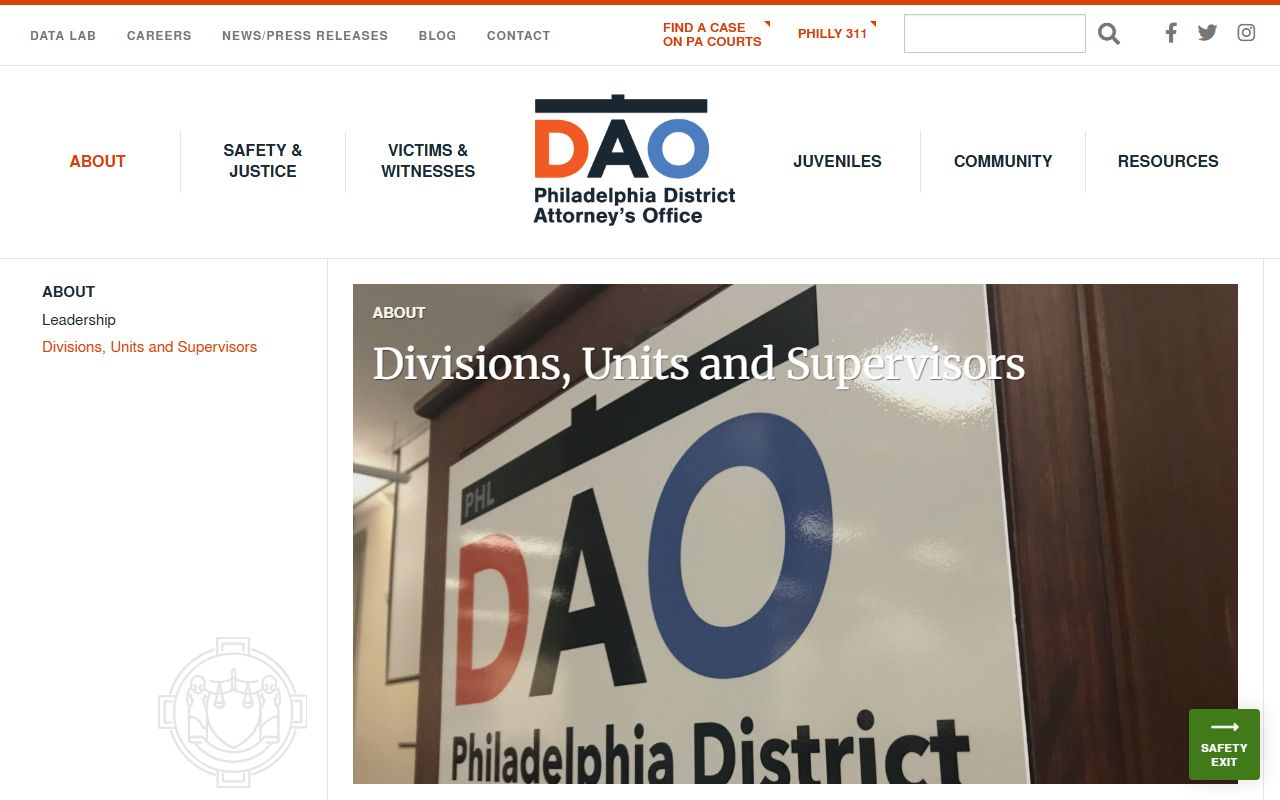
Those units help explain why some docket entries involve charge review, case screening, or post-conviction integrity work.
Sealed Philadelphia County Criminal Records
Restricted Philadelphia County criminal court records include juvenile matters, sealed cases, expunged cases, and filings with confidential personal identifiers. Pennsylvania's case records policy controls public access and redaction rules. Clean Slate limited access and court-ordered sealing usually restrict public visibility. Expungement under 18 Pa.C.S. Section 9122 can remove or destroy eligible record information after a court order.
| Point | Sealed or Limited Access | Expunged |
|---|---|---|
| Public Visibility | Hidden or restricted from ordinary public access | Removed, destroyed, or segregated after the order is processed |
| Typical Basis | Court order, Clean Slate limited access, confidentiality rule, or policy | Eligibility under 18 Pa.C.S. Section 9122 and a court order |
| Verification | Use court orders and updated docket access | Use court orders, repository processing, and official criminal-history channels |
| Limits | Some agencies may retain restricted access | Processing can vary by agency and database |
The Pennsylvania expungement statute capture below is the source for the main expungement authority.
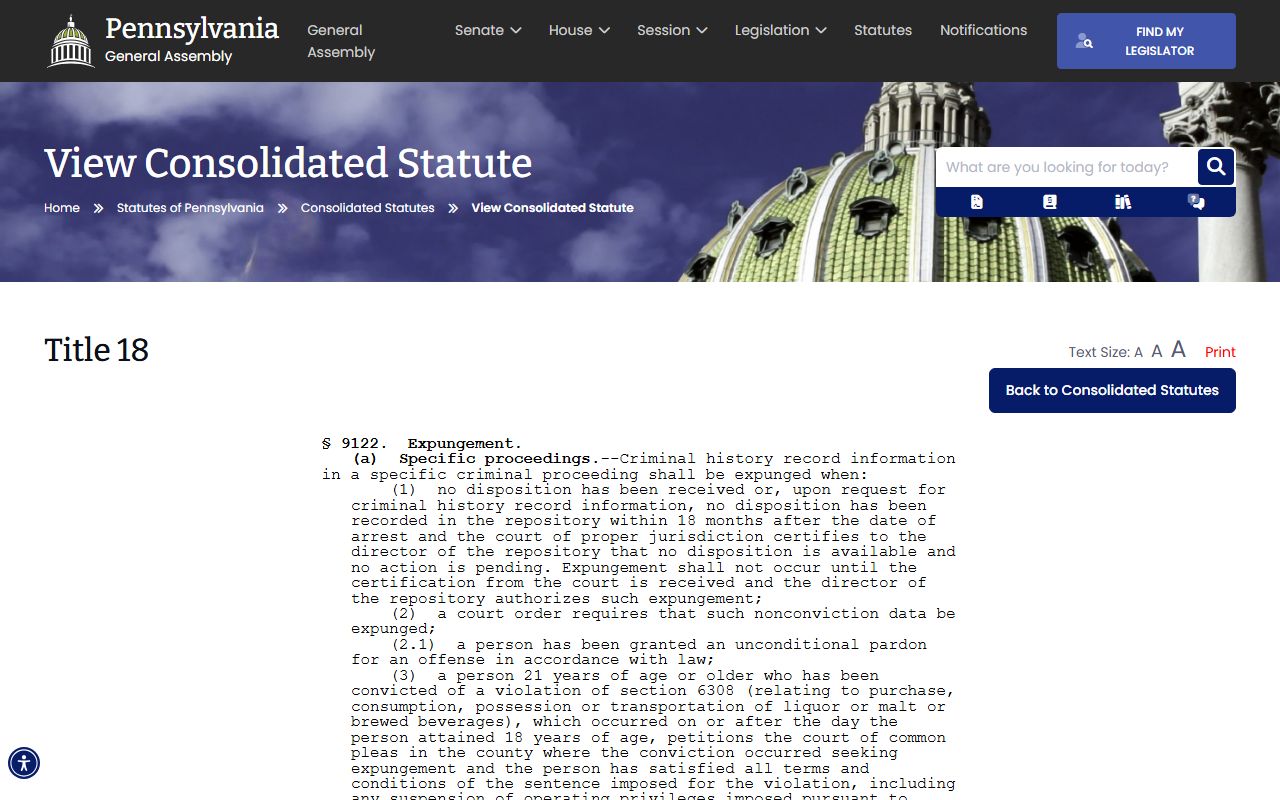
Eligibility should be checked against the statute and the actual docket history, including any linked MC and CP case numbers.
Philadelphia County Criminal Record Access
Public docket access is governed by court policy and state law. The Pennsylvania court public records policies hub links the case records policy and limits chart. The 18 Pa.C.S. Section 9121 criminal history dissemination law explains why public docket sheets should not be treated as a full criminal-history background check. Docket access can be enough for case research, but official criminal-history requests follow different rules.
Note: UJS criminal docket sheets can show public case events, but they are not official background checks.
The Conviction Integrity Unit source capture is included because post-conviction review may affect records after a case is closed.
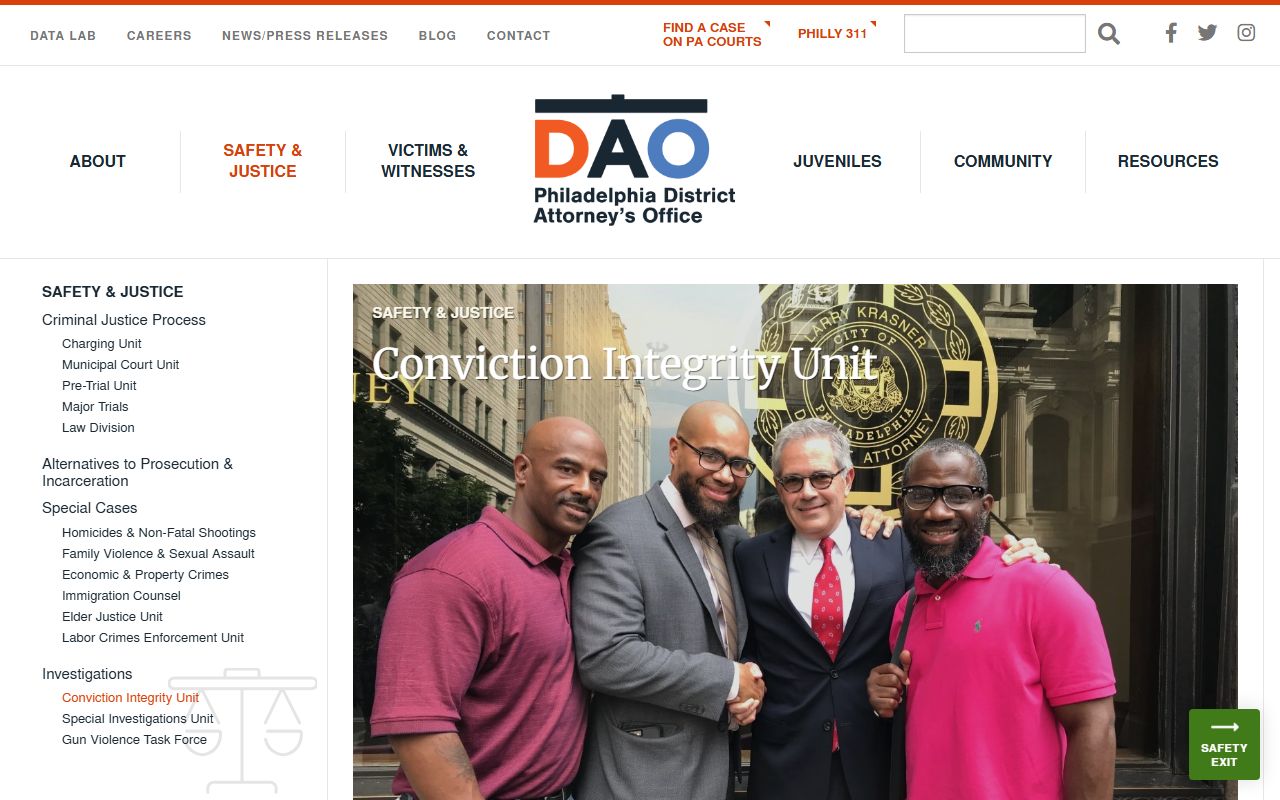
Post-conviction relief, appeals, or integrity review can create later docket entries that change how an older criminal case should be read.
Criminal Case Offices
The Philadelphia District Attorney prosecutes criminal cases. The official site identifies Lawrence S. Krasner as Philadelphia's 26th District Attorney and lists office divisions, including the Charging Unit and Conviction Integrity Unit. The Defender Association of Philadelphia is the public defender entity named in the research. It provides courtroom defense, client advocacy, and connection to resources for eligible defendants.
Defender Association of Philadelphia
1441 Sansom Street
Philadelphia, PA 19102
215-568-3190